IVF Due Date Calculator
Calculate IVF due date Choose your procedure type and key date in the form above.
Calculate your precise gestational age, pregnancy milestones, and expected delivery date with clinical accuracy based on your custom fertility treatment schedule.
The Complete Guide to IVF Pregnancy Timelines and Calculations
Waiting for your child to arrive is one of the most exciting times of your family journey. When you go through fertility treatments you get a unique advantage. You know the exact day your embryo was created or placed inside your womb. This makes it much easier to calculate ivf due date than a natural conception. If you conceived naturally doctors have to estimate when your body ovulated. With assisted reproduction that medical guesswork completely disappears. Our helper acts as an embryo transfer pregnancy calculator to give you clear dates and absolute peace of mind.
Seeing a positive result on a home test brings pure happiness. Many families feel extremely relieved but immediately get confused by all the conflicting dates given by different fertility experts. That early confusion is entirely normal. Let us look closely at how a modern IVF pregnancy calculator works and why it provides such highly reliable delivery schedules.
How Doctors Calculate Due Date After IVF
To understand how to calculate due date after ivf you first need to look at how traditional clinical dating works. Obstetricians typically begin counting from the first day of your last cycle. This standard measurement is known as your clinical gestational age. However that calculation relies on the belief that every woman has a perfect twenty eight day menstrual flow and releases an egg exactly on day fourteen. In the real world cycles vary wildly from person to person.
When you use our simple IVF conception calculator you do not have to rely on the unpredictable nature of your last flow. Instead your baby arrival calculations anchor directly on the exact date of your embryo transfer or the day your eggs were retrieved. Because you know the physical timing of these special events you can identify your estimated delivery date with complete confidence.
Reproductive organizations like the American College of Obstetricians and Gynecologists use these explicit transfer timelines to set your standard clinical calendar. Using a specialized week and date calculator designed specifically for assisted fertility ensures that your clinical care team and your ultrasound scanning specialists are always speaking the same language.
The Mathematical Formulas Behind Your Transfer Dates
You might wonder why we need a specialized embryo transfer due date calculator instead of a regular gestational counting wheel. The physical reason is that your embryo has already reached several days of complex development. It is not starting from zero.
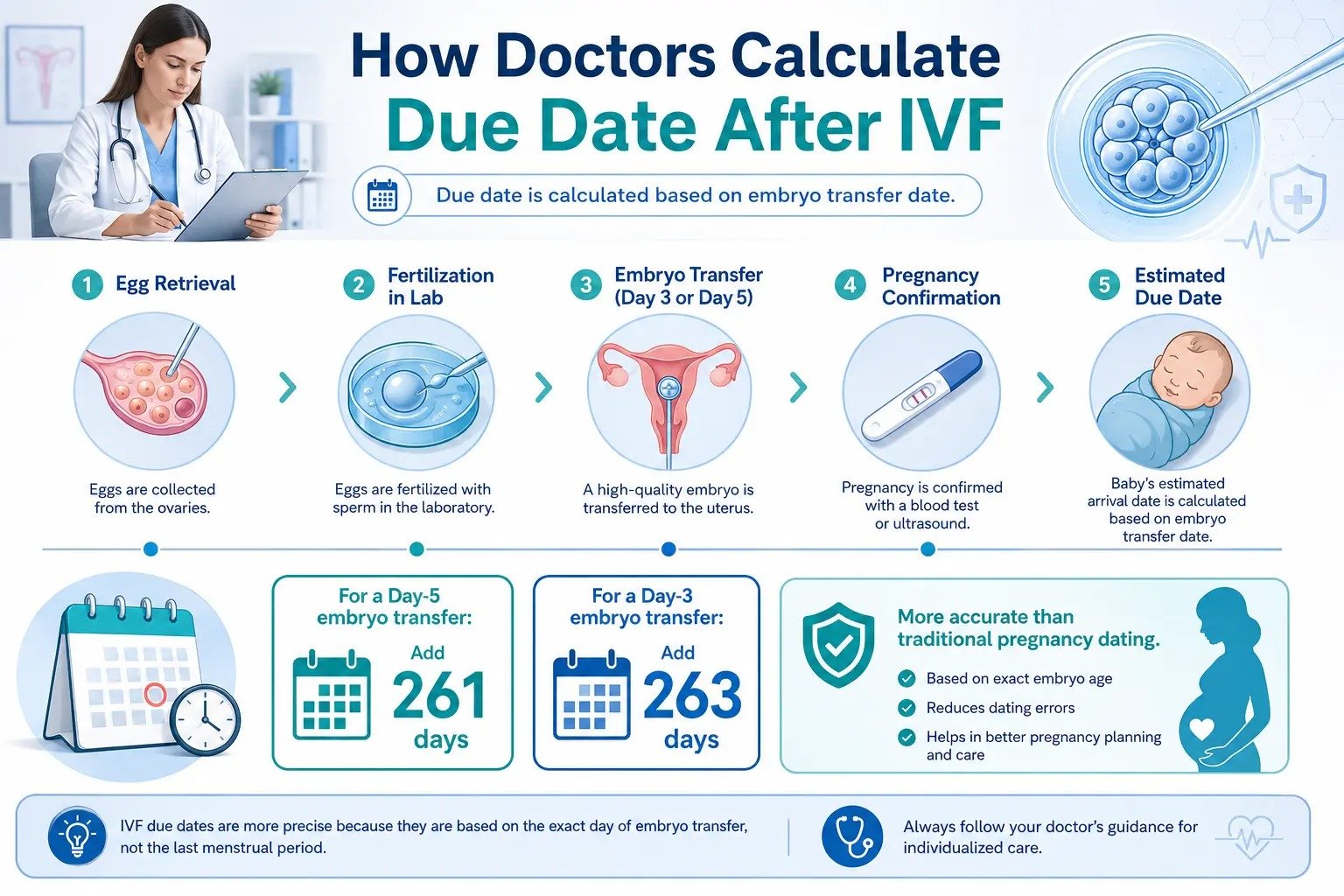
If you completed a fresh procedure your IVF baby due date estimator utilizes your surgical egg retrieval date as the absolute starting anchor. To locate your expected birth date you add two hundred and sixty six days to the day of retrieval. This perfectly mimics the natural timeline where fertilization occurs on ovulation day.
If you are relying on a frozen embryo transfer due date calculator the mathematical steps must alter slightly based on the exact developmental stage of the cells when they were preserved. A precise IVF transfer date calculator automatically adjusts the delivery date depending on whether you received a three day or five day embryo.
For a three day transfer you need our IVF transfer calculator 3 day embryo. This formula takes your actual transfer day and adds two hundred and sixty three days. For a five day blastocyst you utilize our IVF transfer calculator 5 day embryo. This formula adds two hundred and sixty one days because your embryo is already two days more developed.
Consider a simple real world scenario. If you ask yourself if i conceived january 1st when is my due date you need to know which procedure occurred. Assuming that date represents your egg retrieval you add two hundred and sixty six days. This places your baby arrival on September twenty fourth. Having an exact date turns a complex scientific journey into a real and exciting anticipation.
Why Your IVF Timeline Is More Accurate
Most expectant parents are highly surprised to find out that only about four percent of babies actually arrive on their exact expected dates. However an interactive IVF expected delivery calculator is still the most precise tool available to modern medicine. In a standard conception sperm can survive inside the body for multiple days before meeting the egg. This means the actual hour of fertilization is a complete mystery.
With our optimized IVF EDD calculator there is zero mystery. Your medical specialists know the exact hour your cells were combined. This high level of certainty assists your obstetric care team as they monitor your baby growth during regular scans. If a future ultrasound indicates your baby is measuring slightly ahead or behind your physician will almost never change your official date because your initial transfer schedule is fixed.
This incredible reliability brings deep relief to families who have navigated a lengthy journey to conceive. We know how anxious the early weeks of waiting can feel. Having a secure day of arrival helps you prepare your life, organize your home, and coordinate your leave with certainty.
Tracking Your Gestational Weeks Step by Step
Once your date of arrival is set you can confidently track your progression. A customized IVF pregnancy week calculator does much more than pinpoint your final delivery. It helps you schedule your first, second, and third trimesters.
A standard pregnancy due date calculator with ivf will help your doctor calculate your corrected equivalent last menstrual period. Doctors refer to this as your LMP equivalent. To find this date your IVF calendar calculator counts backward. For a five day transfer it subtracts nineteen days from your transfer date. For a three day transfer it subtracts seventeen days. This specific date is written into your hospital chart so standard monitoring software can record your baby growth accurately.
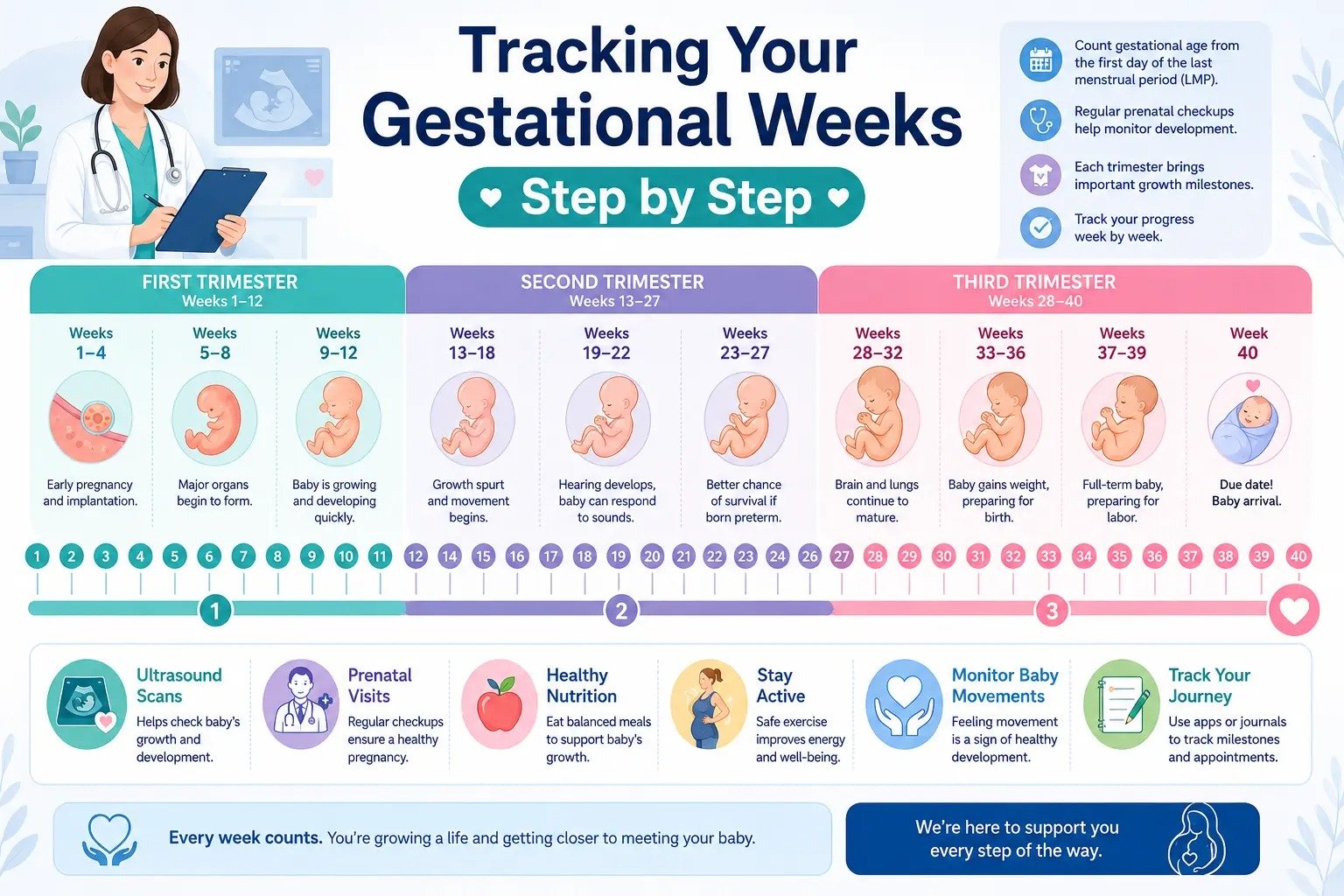
From there you can use our detailed IVF pregnancy tracker to monitor your weekly achievements. You will know exactly when you cross your twelfth week. This is an incredible developmental milestone that makes many parents feel confident enough to share their happy news with family and friends. It also helps you prepare for your required anatomical scans and physical health screens.
Your Personal Timetable and Implantation Roadmap
Using a dedicated IVF cycle calculator is about more than locating a target date in the distant future. It represents a way to understand your complete IVF timetable treatment plan. This detailed process involves many distinct steps including hormone injections, ultrasound monitoring, and final tissue placement.
An IVF success timeline calculator helps you conceptualize what is happening inside your womb right after the transfer is completed. Once the cells are placed they must emerge and anchor to your uterine wall. This is where an IVF implantation calculator and an IVF transfer implantation timeline become highly valuable.
For a five day blastocyst physical implantation typically begins within one to two days after your procedure. If you received a three day embryo it may take three to four days to reach the proper stage and start anchoring. Understanding this physical IVF transfer to due date timeline makes the challenging two week wait feel far more manageable.
You do not have to perform these complex calendar adjustments manually. Our interactive IVF pregnancy timeline calculator manages all the difficult dating logic for you. Whether you need an IVF ET calculator, an IVF FET due date calculator, or an IVF embryo age calculator our application handles every procedure variation.
Understanding Gestational Age and Biological Milestones
As you advance in your journey your medical providers will discuss your developmental progress. Using an IVF gestational age calculator keeps you aligned with your medical provider. It tells you exactly how many weeks and days your pregnancy has progressed.
Many families experience confusion during their IVF transfer day calculator calculations. They wonder how they can biologically measure as four weeks pregnant only two weeks after their medical procedure. This occurs because the standard system adds two weeks of baseline time to correspond with a traditional ovulation cycle. Our IVF due date by transfer date system automatically integrates this baseline time. This ensures you are always speaking the same language as your local healthcare provider.
Knowing these schedules helps you feel completely in charge of your progress. You can celebrate each week as a successful achievement. Each passing day brings you one step closer to holding your beautiful baby in your arms.